Small rewards, big payoffs in first-of-its-kind mental health program
A trip to the movies. A cup of coffee. A bag of chips.
For most of us, these are everyday pleasures, easy to take for granted. For participants in a pilot program supporting people who live with both mental health challenges and stimulant use, these small rewards are a lifeline that keeps them connected to care. They are also, in a real sense, the medicine itself.
While medications exist to help treat opioid use disorder, there are none for stimulant use, including cocaine and methamphetamine. The treatment considered standard-of-care is contingency management, a behavioural therapy that pairs small incentives and recognition with each step a participant takes toward the goals they set for their own recovery.
When psychiatrist Dr. Isaac Cheveldae brought the research forward, no program like it existed in Saskatchewan. A $35,000 investment from an anonymous donor to RUH Foundation launched the Pathways to Recovery pilot in January 2025.
“Even though there is a lot of evidence behind it, we had hit a roadblock with funding. Without the generous donor, this program would not have been a reality,” says Dr. Cheveldae. “It makes me very optimistic to know that there are individuals out there that care about our treatments, they care about our patients, and they want to help expand and develop new programs in our province.”
Participants commit to a 12-week cycle through Mental Health and Addiction Services, where they connect with a nurse and an addictions counsellor for twice-weekly appointments. They can also meet with Dr. Cheveldae for psychiatric support. Each visit is a chance to check in, talk through challenges and draw for a prize. While negative drug tests earn them rewards, a setback doesn’t disqualify anyone from remaining in the group. The aim is to keep people engaged and recognize every step.
It’s working. Staff report participants are maintaining abstinence or reducing their use and building stronger relationships with their care team. One participant returned to school to finish Grade 12, crediting his new “clear thinking.” Another secured independent housing for the first time in his life.
“It’s not easy for people that struggle with a substance use disorder to choose themselves every day, choose their better health every day, and just continue to make those steps,” says addiction counsellor Randi Phillips, who says that the program has given participants a sense of belonging that motivates them to continue their recovery.
“We know that healing comes from community. We know that healing comes from connection. And what I hope we start leaning into more is that our community is only as healthy and strong as our community members,” she says.
The pilot is now in its second year, and word is spreading. Twenty participants have completed the program, and after a province-wide presentation on its results, health teams across Saskatchewan have expressed interest in bringing this model to their communities.
It’s the kind of momentum your generosity creates: donors fund a bold idea, the idea proves itself, and better care reaches more people across our province.
Read the full 2025–2026 Impact Report.
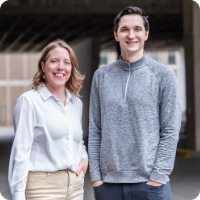
Randi Phillips (left) and Dr. Isaac Cheveldae.